Our Mission: Make the right thing to do, the easy thing to do.
A brief history of TBS Technologies:
In 1978, Our founder, Tony Tokarchyk, a Philadelphia-born Drexel University graduate, recognized the growing e-waste issue in our country. By partnering with established players in the industry he founded TBS Industries and developed the first mechanical separation and shredding techniques for modern electronics. Over the next 30 years, TBS and its partners developed and refined the techniques for the safe handling and effective recycling of millions of tons of e-waste. Many of these methods are in still use throughout the world.
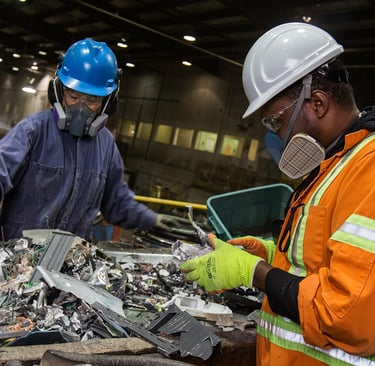
Today, TBS continues our commitment to tackling this global issue. We promote excellence in the industry by collaborating with local partners to raise awareness for the importance of safe, secure electronics recycling. TBS supports free community recycling events and continuously develops new methods for safe & effective recycling in the evolving electronics landscape. TBS is R2v3 certified and complies with the strictest DEP, DoD, and ISO standards for environmental protection and data-security.
Tackling the landfill problem
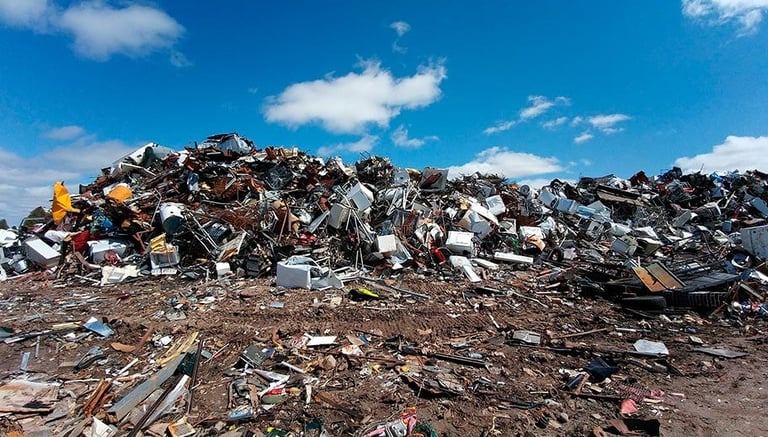
In the late 1970s, the microcomputer revolution brought electronics into the business world at an unprecedented scale. By 1984, PCs, CRT monitors, floppy drives, and early printers became the standard in businesses and schools. By the 90's, internet-connected computers were common in homes. These devices contained leaded glass, cadmium, mercury, and other chemical-laden materials safe when in use but hazardous when discarded.
Landfills quickly saw the first wave of obsolete equipment. By the mid-1980s, U.S. municipalities were burying tens of thousands of tons of circuit boards and monitors annually. Early studies revealed that heavy metals were leaching into groundwater, prompting the 1986 Basel Convention discussions and the first U.S. state-level e-waste laws.
Global e-waste generation grew from virtually zero in 1980 to 2 million metric tons by 1990, then exploded to 20 million tons by 2000 and over 59 million tons by 2023 (UN Global E-waste Monitor). Only 17–22% is currently documented and properly recycled. The rapid obsolescence cycles—mainframes to PCs to laptops to smartphones—creates a continuous waste stream that traditional municipal systems were never designed to handle. Responsible electronics recycling is more critical than ever to sustainably reduce the growth of e-waste pollution and preserve our planet's resources.
The team:
Tony Tokarchyk
Founder
William Cusa
Hi-tech Expert / Principal

Daniel Bucci
Logistics / customer relations
Dave Bello
Principal / IT
ITAD made easy.
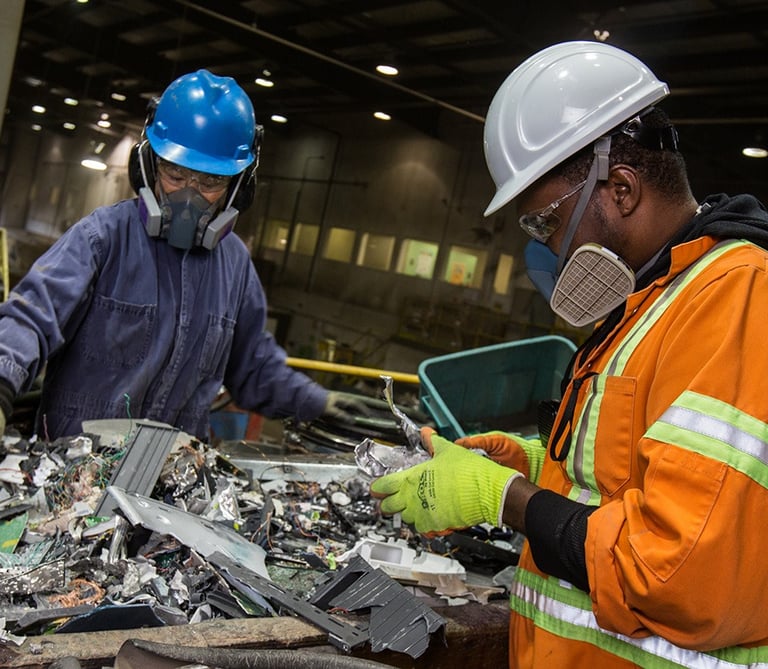
TBS Technologies is a full service IT Asset Disposition company. We focus on the environmentally responsible repurposing of computers, enterprise, and high-tech test equipment. We provide nationwide refining and brokering services for precious metal value recovery.
Questions? Reach out to our friendly team.
Phone
sales@tbstech.net
856-827-3347
© 2025 TBS Technologies. All rights reserved.